Sep 21, 2026·Grant Wise
Real estate recruiting for team leaders: Chris Giannos on follow-up that scales
Chris Giannos (Humanize) on real estate recruiting for team leaders—follow-up systems, the microwave effect, and organic + paid that compound.
You’re not losing recruiting because you lack charm.
You’re not losing because your brand is weak.
You’re not losing because the budget’s too small.
You’re losing because real estate recruiting for team leaders gets treated like a short campaign. One burst of outreach. One contest week. One “we’re hiring” post. And then you just stop.
And when the agent is finally motivated to have the recruiting conversation, they don't remember that you're an option.
That cool-down has a name. You feel it every quarter. It’s the microwave effect. An agent gets hot after a bad split change. They take your coffee. They nod. Then their kids, their pipeline, and next week’s listing grab them. Three weeks later they don’t remember what they were hot about. If your follow-up assumes people stay warm after one talk, you’re betting they’ll still know your name when life finally pushes them to move.
Here’s what you need instead. A named list you actually work. A follow-up plan that assumes they forget you. An organic and paid scoreboard so ads aren’t your only dial. Give-first touches that keep you in the room. The same care you already expect from preferred partners.
Follow-up cadence: the only recruiting “secret” that scales
Luck isn’t a recruiting plan. The operators who win at volume aren’t chasing a shiny hack. They’re really good at follow-up. That’s it. Hard? Yes. Fancy? No.
You don’t control when an agent’s brokerage adds a fee. You don’t control when their leader frustrates them. You do control whether they can still picture your face when that day hits. If the last time they heard from you was a contest post in March, they will call the person who texted last Tuesday.
Here’s a practical cadence. It fits a team that spends $10k+ per month on ads. It also fits a team that closes 100+ homes per year.
- Named list, not vibes. Pull 100–500 agents you actually want in your market. Cap the list so you can work it. If the list is too big to call, it isn’t a list. It’s a hope folder.
- Monthly voice contact. One call per name per month beats random “recruiting blitzes.” The agent who hears your voice twelve times a year is the one who remembers you when they’re ready.
- Value email 2–3 times per week. Most messages have no join-us ask. Every 8–10 emails, send one soft invite to talk. You’re teaching them you show up even when you’re not closing.
- Organic social that speaks to agents. Consumer ads and agent value props are different. Keep the creative separate. A buyer ad won’t make a top producer think of joining you.
- Two-way start. When you get a number at an event, open house, or coffee, send a question within minutes. Don’t send a one-way contact card that dies in the thread. Chris does this the second he’s done talking. The reply is what starts the relationship.
Track it like ads. Count touches. Count talks. Count stage moves. Count joins. If it’s not on a board with an owner, it’s not a real system. It’s a mood.
Who runs it? On most high-volume teams, the team leader or a recruiting ISA owns the list. Agents don’t “recruit when they feel like it.” Block 30–45 minutes each day for calls. Keep CRM tasks honest. Skip a month and the agent who was warm in January will join someone else in March. The cadence is boring on purpose. Boring compounds. Clever resets.
Design for the microwave effect (assume they forget you)
People heat up when motivation spikes. Then something else grabs them. They forget what they were hot about. Recruiting that only works in that spike will always feel random. You need a plan for the cool-down.
Build a cadence that expects forgetting:
- After every warm talk: set the next touch before you hang up. Pick a date and a channel. If you leave without a next step, that coffee evaporates.
- After a pitch or coffee: send a useful follow-up within 48 hours. Share an insight, an intro, or a market note. Don’t say “just checking in.” Checking in is how threads die.
- When silence returns: stay on the monthly loop. Don’t ghost. Don’t spam. The agent who went quiet isn’t rude. They’re busy. Your job is to still be an option when they get hot again.
- Audit weekly: where do warm recruiting or partner threads die after first touch? That gap is where your next hire quietly chooses someone else.
The microwave effect isn’t a pep talk. It’s a design rule. Plans that assume lasting excitement will lose. Plans that assume people forget you will win.
Organic + paid: give partnership growth its own scoreboard
Paid media can put your name in front of agents. It can’t sit with them when they’re ready to move. Some high-volume teams run recruiting 100% through ads. Then cost per lead rises. Creative gets tired. The pipe stalls. And there’s no warm intro left to catch the fall.
Run parallel systems. Not one ad-only dial:
- Paid — Reach and speed on search, YouTube, and social. Measure cost per lead, talks booked, and cost per join.
- Organic content — Reputation and inbound. Measure content that leads to DMs or calls, and agent-side engagement.
- Partnership / warm intros — Trust transfer and reach. Measure intro volume, stage conversion, and kept relationships.
- Outbound cadence — Presence when outside drivers hit. Measure touches, reply rate, and stage moves.
The point isn’t “quit paid.” The point is this: when volume dips, you should have more than one dial. Give partnership-driven organic its own owner. Give it a weekly review. Treat it with the same care you give ad spend.
Use this filter in leadership meetings. If paid recruiting cost per lead rises 20%, what organic or partner lever moves the same week? If the answer is “nothing,” you don’t have a dual system. You have ads with a networking hobby. Content, events, speaking, and warm partner intros belong on the same weekly scoreboard as spend. Chris’s shop runs roughly 60% organic and 40% paid for a reason. When paid softens, the relationship flywheel still turns.
Give first: quantity of reps, then quality
High-value relationships rarely close on the clever ask. They close after more give-first touches than feels easy. Treat relationship building like any skill. Get more contact first. Obsess over perfect wording later. Patterns show up after reps. Polish follows proof.
Chris’s story makes the math real. He sent Tom Ferry 51 text messages over about three months. Video. Testimonials. Updates. Not “hey / hey / hey.” Tom Ferry became Humanize’s first pre-seed and seed investor. Most people stop at two or five tries and tell themselves they don’t want to bother anyone. Chris kept going with value until a conversation started. Use that as persistence with a gift attached. Don’t use it as a spam license.
Rules that keep this from becoming harassment:
- Friend and curiosity first. Pure “I need a favor” energy kills the flywheel. The other person can feel the ask before you type it.
- Give without a deal attached. Offer intros, testimonials, useful market notes, or help with a problem. Do this before you ask for exclusivity, lead flow, or co-op dollars.
- Vary the touch. Use text, video, social proof, and updates. Creative persistence beats “hey / hey / hey.”
- Trust your gut on bother vs. quit. Most people stop at 2–5 tries. High-value targets often need more. Deliver value. Don’t nag.
- Delayed payoff is the edge. Instant-reply culture trains leaders to quit when silence lasts a week. Recruiting rewards people who stay in the game long enough for the agent to remember them.
If your preferred-partner or recruiting pipe dies after one lunch, you don’t have a plan. You have a calendar entry that forgot to follow itself.
Preferred partners and recruiting fail the same way
Recruiting is relationship work. So is your preferred-partner bench. The failure mode is the same. Nobody owns follow-up. Brand risk spreads across agents. Cost of acquisition stays stuck on paid. The relationship layer never gets a scoreboard.
Here’s what that looks like in real life. A weak vendor doesn’t cost one deal. It shows up as three angry agent texts, a bad review, and a client who won’t refer you. Recruiting neglect multiplies the same way. You skip the monthly call list for eight weeks. Then the top producer you wanted joins the team that stayed visible.
Map the parallel on purpose:
- Agents you want match vendors you allow near your brand
- Monthly recruiting touches match partner service rules and post-close ownership
- Give before ask matches client experience before co-marketing dollars
- Say no faster to low-fit agents matches cut partners who create support tickets instead of five-star experiences
When both pipes run on owners, cadences, and outcomes, organic referrals and recruiting intros stop resetting every month. That’s how partnership work becomes a real line item. It can offset ad pressure. It’s not a vague “nice to have.”
One shared ops habit helps both. Name owners. Set service rules. Follow up. Make cut/keep decisions. That steadies talent and post-close experience without another ad dollar.
Done > perfect: ship the reps that fear blocks
Fear of looking silly keeps team leaders from posting. It keeps them from calling. It keeps them from staying visible to agents. Early content will be rough. Early outreach will be rough. That’s the tuition. People aren’t thinking about you as much as you think. They’re dealing with their own day. Their spouse just texted. Their kid needs a ride. Your imperfect post is already gone from their mind.
Chris told a story about early BombBomb videos in a corner with a blurry Remax backdrop. Hundreds of them. Rough. Then better. He still has that old footage. The point wasn’t polish on day one. The point was reps until the work got good.
Practical install:
- Post imperfect agent-facing content on a fixed cadence. Even a phone photo plus a caption beats silence. Silence is what makes them forget you exist.
- Make a few outbound calls each day. Don’t wait for the perfect script. The agent who never hears your voice will never join your team.
- Use tools to draft. Then personalize. Shipping used to separate good from great. Now the separator is whether you ship at all.
- Review monthly. What got replies? Do more of that. What got silence? Change the ask or the gift. Don’t quit the loop.
Repetition is how relationship and content skills grow. Waiting for polish is how microwave recruiting stays lucky.
What Chris Giannos adds (proof, not the outline)
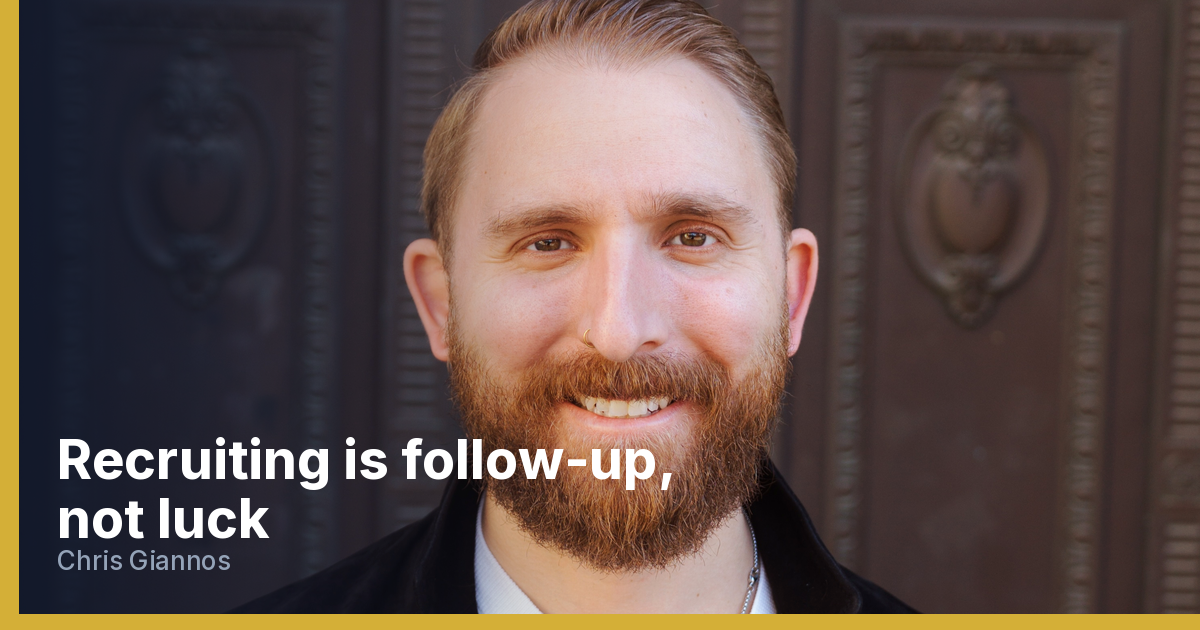
Chris Giannos is founder and CEO of Humanize. Former Zillow. Built two real estate businesses. Learned to recruit and onboard agents at scale. Then Humanize spun out of an internal tool.
In Partner & Profit Episode 02 he shares the proof. Humanize put about 30,000 agents through the platform in the prior year. That sits against roughly 250,000–300,000 annual agent moves. At recording, Humanize growth ran roughly 60% organic / 40% paid.
His blunt line: luck has nothing to do with it. The best recruiters he knows are excellent at following up. The 51 texts to Tom Ferry sit in the same lesson. Stay useful. Stay present. Don’t invent a secret when the work is follow-up.
Listen: Relationship-Driven Recruiting Strategies for Real Estate Leaders with Chris Giannos
Team-leader checklist this week
- Pull a named list of agents you actually want. Assign a simple monthly touch plan. Consistency beats cleverness.
- Write the microwave leaks. Note CRM tasks, post-pitch silence, and partner intros that die after lunch.
- Stand up a recruiting scoreboard next to ads. Track touches, talks, stage, and joins. Name an owner.
- Split organic vs paid recruiting metrics. Give partnership and warm intros their own weekly review.
- Map vendor, mortgage, and home-service relationships. Mark brand risk the same way you mark low-fit agent targets.
- Ship three imperfect agent-facing posts or value emails. Schedule next week’s cadence before motivation cools.
- Pick one give-first move this week. An intro, an insight, or help. Do it before any exclusivity ask.
- Cut or upgrade one relationship motion that creates tickets instead of trust.
FAQ
Why does relationship-driven follow-up matter for real estate recruiting for team leaders?
Relationships and partnerships drive lasting growth. They build trust. They help organic referrals. So recruiting and preferred-partner pipes grow over time instead of resetting every month.
What is the 'microwave effect' in recruiting?
The microwave effect means people expect quick results. People heat up with motivation. Then they cool off when something else grabs their attention. That is why steady follow-up matters more than one burst of outreach.
How can overcoming fear improve real estate marketing?
Overcoming fear helps agents and leaders put themselves out there. That leads to more real connections. It cuts worry about what others think. So content, calls, and partner outreach actually ship.
What role do organic and paid marketing channels play in recruiting?
Both organic and paid channels matter. Organic builds trust and reputation. That includes partner reach. Paid channels expand reach and visibility.
How does 'done is better than perfect' apply to real estate?
This mindset pushes action and small improvements. Outreach, content, and partner intros ship now. Waiting for perfect costs chances. Growth comes through reps.
Next step
Want preferred-partner economics with the same follow-up care as the recruiting system above? Want that without turning your team into a vendor-management mess? See if your market is open: Apply / check market availability.
Listen to the full episode: Relationship-Driven Recruiting Strategies for Real Estate Leaders with Chris Giannos
Questions this article answers
Relationships and partnerships drive lasting growth. They build trust. They help organic referrals. So recruiting and preferred-partner pipes grow over time instead of resetting every month.